Homemade Focaccia Recipe
Introduction
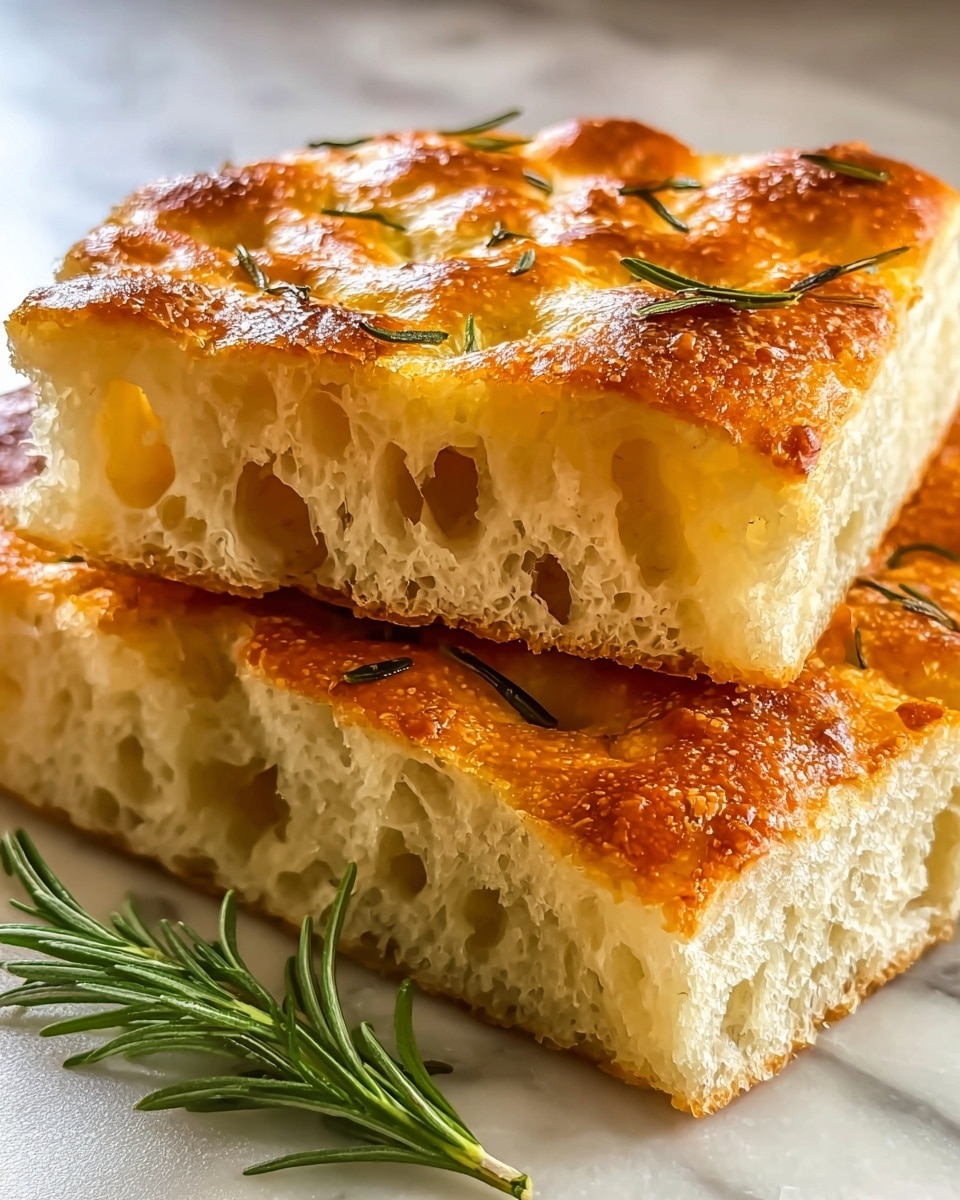
Focaccia is a wonderfully soft and flavorful Italian flatbread, perfect as a snack, side, or sandwich base. This recipe guides you through an easy method to create tender, golden focaccia with crisp edges and a fragrant rosemary topping.
Ingredients
- 1¾ cups lukewarm water
- 2 teaspoons instant dry yeast
- 2 teaspoons sugar
- 4 cups all-purpose flour or bread flour
- 3 teaspoons salt
- 2 tablespoons extra virgin olive oil + 2 tablespoons to grease the baking pan
- 3 tablespoons water
- ½ teaspoon salt + flaky salt (optional)
- 3 pinches rosemary (optional, fresh or dried)
Instructions
- Step 1: Bloom the yeast by whisking lukewarm water, instant dry yeast, and sugar in a small bowl. Let sit for 30 seconds until the yeast fully dissolves. If not dissolved, start over with fresh yeast.
- Step 2: In a large mixing bowl, stir together flour and salt. Pour in the yeast-water mixture and stir with a wooden spoon until a wet, sticky dough forms (about 1 minute). Add 2 tablespoons olive oil and stir for another minute to incorporate.
- Step 3: Choose your proofing method: For quick proofing, cover the bowl and let the dough rise in a warm oven for 1.5 to 2 hours until doubled. For slow proofing, cover and refrigerate dough for 8 to 24 hours, then let sit at room temperature for 2-3 hours before proceeding.
- Step 4: After proofing, fold the dough over itself 20-40 times with a spoon until it tightens, taking about 30-60 seconds.
- Step 5: Grease a 9×13-inch baking pan with 2-3 tablespoons olive oil. Drop the dough into the pan and spread it using the back of two spoons. Cover and proof for 45 minutes in a warm spot.
- Step 6: Preheat oven to 450°F (230°C). Mix olive oil, 3 tablespoons water, and ½ teaspoon salt in a small bowl. Dip fingers in the mixture and press dimples across the dough. Pour remaining mixture over focaccia and optionally sprinkle with rosemary and flaky salt.
- Step 7: Bake on a medium-low rack for 20-25 minutes until golden brown and crisp. Let cool for at least 5 minutes before slicing and serving.
Tips & Variations
- Grease the pan well with olive oil or use parchment paper to prevent sticking and ensure easy removal.
- Try different pan sizes for varying focaccia thickness and texture: a 9×13-inch pan for medium thickness or a 13×18-inch sheet for thinner, crispier results.
- Substitute bread flour or pizza flour for a chewier texture; mix half whole wheat flour for added depth of flavor.
- Use fresh yeast instead of dry yeast by tripling the amount. Recommended dry yeast brands include Caputo Dry Yeast, Red Star SAF Instant, and Dr. Oetker Instant.
- Customize toppings with olives, cherry tomatoes, or herbs for more flavor variations.
Storage
Store focaccia in an airtight container or wrapped tightly at room temperature for up to 2 days. For longer storage, refrigerate for up to 5 days or freeze wrapped well for up to 3 months. Reheat in a warm oven at 350°F (175°C) for 5–10 minutes to restore crispness.
How to Serve
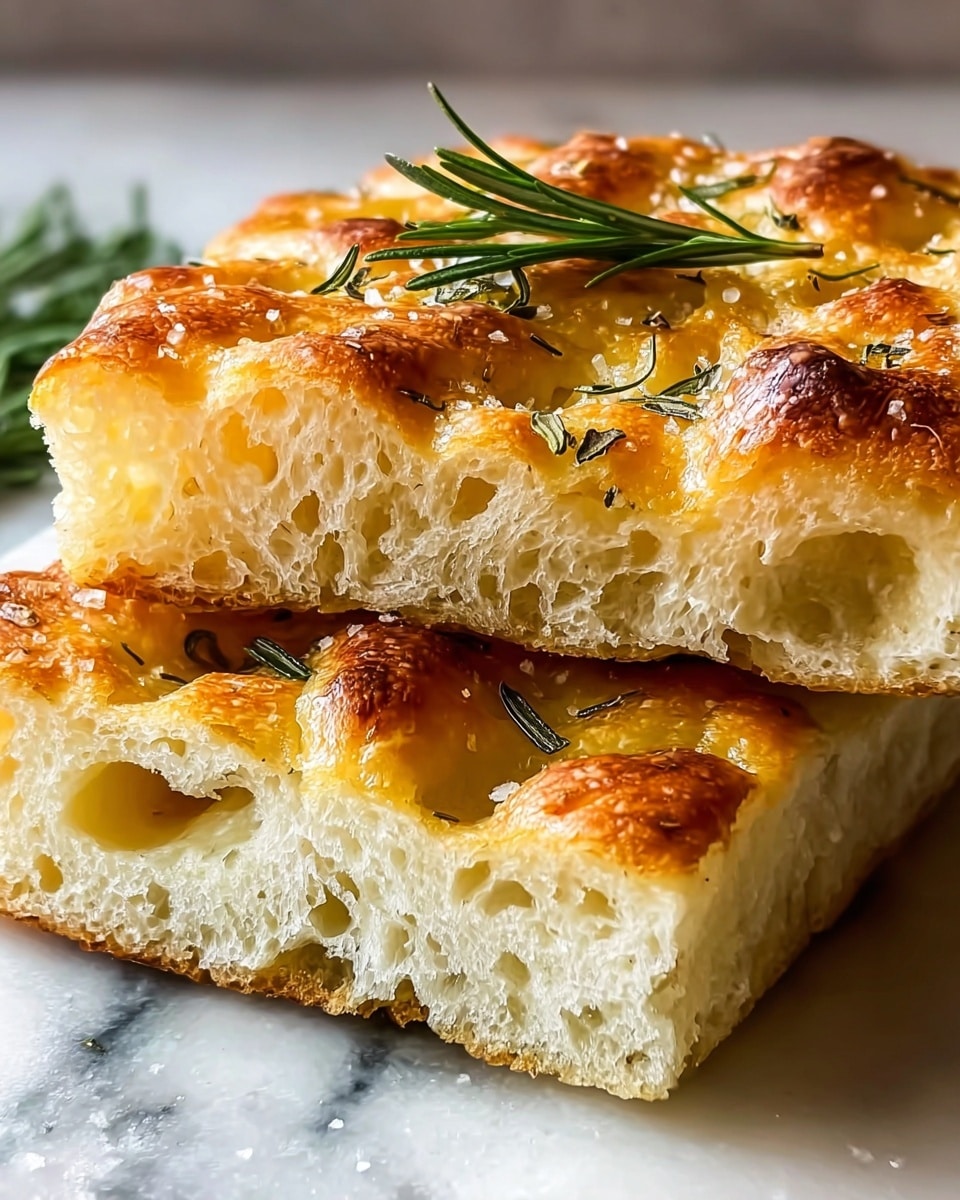
Serve this delicious recipe with your favorite sides.
FAQs
Can I use active dry yeast instead of instant yeast?
Yes, you can substitute active dry yeast, but dissolve it in warm water with sugar first and allow it to proof for 5-10 minutes until foamy before mixing with flour.
What if my dough doesn’t rise properly?
Make sure your water is lukewarm (not hot) and your yeast is fresh. If yeast doesn’t dissolve or foam, start over with new yeast and verify that the environment is warm enough for proofing.
PrintHomemade Focaccia Recipe

This classic focaccia recipe yields a golden, crisp, and fluffy Italian bread that’s perfect for sandwiches or as a side dish. Featuring a simple dough enriched with olive oil and flavored with rosemary and flaky salt, this easy-to-make bread involves a proofing process to develop flavor and texture, followed by baking to achieve a delicious crust.
- Prep Time: 20 minutes
- Cook Time: 25 minutes
- Total Time: 2 hours 45 minutes (including quick proofing) or up to 25 hours (including slow proofing)
- Yield: One 9×13-inch focaccia, serving about 8–10 people 1x
- Category: Bread
- Method: Baking
- Cuisine: Italian
- Diet: Vegetarian
Ingredients
Dough
- 1¾ cups lukewarm water
- 2 teaspoons instant dry yeast
- 2 teaspoons sugar
- 4 cups all-purpose flour or bread flour
- 3 teaspoons salt
- 2 tablespoons extra virgin olive oil
For the Baking Pan
- 2 tablespoons extra virgin olive oil (to grease the pan)
Topping
- 2 tablespoons extra virgin olive oil
- 3 tablespoons water
- ½ teaspoon salt
- Flaky salt (optional)
- 3 pinches rosemary (optional, fresh or dried)
Instructions
- Bloom the Yeast: In a small bowl, combine lukewarm water, instant dry yeast, and sugar. Whisk the mixture and let it sit for 30 seconds until the yeast fully dissolves. If the yeast does not dissolve properly, discard and start with fresh yeast.
- Make the Dough: In a large mixing bowl, mix flour and salt. Pour in the yeast-water mixture and stir with a sturdy wooden spoon for about 1 minute until a wet, sticky dough forms. Add 2 tablespoons of olive oil and stir for an additional minute to incorporate.
- Choose Proofing Method: For quick proofing, cover the dough with a damp cloth or plastic wrap and let it rise in a slightly warm oven (heated for 60 seconds then turned off) for 1.5 to 2 hours until doubled in volume. For slow proofing, cover with plastic wrap and refrigerate for 8 to 24 hours, then let the dough come to room temperature for 2-3 hours before proceeding.
- Folding: After proofing, fold the dough over itself 20-40 times using a spoon; this should take 30-60 seconds until the dough tightens.
- Final Proofing: Grease a 9×13-inch baking pan with 2 to 3 tablespoons of olive oil. Drop the dough into the pan and spread it evenly using the back of two spoons. Cover the pan with a damp cloth, baking tray, or plastic wrap and let it proof for 45 minutes in a warm spot. Meanwhile, preheat the oven to 450°F (230°C).
- Prepare the Topping: In a small bowl, mix 2 tablespoons olive oil, 3 tablespoons water, and ½ teaspoon salt. Dip your fingers into this mixture and press dimples evenly across the surface of the dough. Pour any remaining oil-water mixture over the dough, and optionally sprinkle with rosemary and flaky salt.
- Bake: Place the focaccia on a medium-low oven rack and bake for 20-25 minutes until it is golden brown and crisp on top. Once baked, allow it to cool for at least 5 minutes before removing from the pan, slicing, and serving.
Notes
- Oil or Line the Pan: To prevent sticking, grease the pan with 2 to 3 tablespoons of olive oil or use parchment paper.
- Pan Options: 9×13-inch pan yields medium-thick focaccia ideal for sandwiches; 13×18-inch sheet creates thinner, crispier bread suitable for focaccia pizza; 8×8-inch pan makes thick, bready focaccia; 9×9-inch pan produces slightly thinner but fluffy focaccia; 10-11 inch round pan is ideal for round focaccia.
- Flour Substitutions: Bread flour, pizza flour, or 50% whole wheat flour can be used for variation. Premium Italian flours like Caputo Pizzeria or Caputo Nuvola are excellent choices.
- Yeast Substitutions: Fresh yeast can be used instead of dry yeast at three times the amount. Recommended yeast brands include Caputo Dry Yeast, Red Star SAF Instant, and Dr. Oetker Instant.
Keywords: focaccia, Italian bread, olive oil bread, rosemary focaccia, homemade bread, easy focaccia, bread recipe