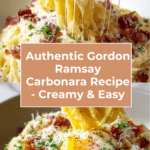
Gordon Ramsay Carbonara: The Ultimate Recipe & Guide Recipe
Introduction
Gordon Ramsay’s Carbonara is a culinary classic that stands apart from the usual cream-based versions. This authentic Italian dish relies on simple, high-quality ingredients to create a creamy, savory pasta experience without using any cream at all. It’s quick, elegant, and perfect for any night of the week.

Ingredients
- 1 pound spaghetti
- 5 ounces guanciale, pancetta, or thick-cut bacon, diced
- 4 large eggs
- 1 cup grated Pecorino Romano cheese, plus more for serving
- 1/2 cup grated Parmesan cheese
- Freshly ground black pepper, to taste
- 2 cloves garlic, minced (optional)
- 2 tablespoons olive oil (if using bacon, you might not need this)
- Salt, to taste (be careful, the cheese and guanciale are salty)
Instructions
- Step 1: Dice the guanciale (or pancetta/bacon) into small, roughly ¼-inch pieces.
- Step 2: Place the diced guanciale in a cold, large skillet. Turn the heat to medium-low and cook, stirring occasionally, until the guanciale is crispy and golden brown—about 10-15 minutes. Remove with a slotted spoon and set aside on paper towels to drain, but keep the rendered fat in the pan.
- Step 3: If using garlic, add olive oil to the pan if needed. Sauté the minced garlic over medium-low heat for about 30 seconds until fragrant. Be careful not to burn it, then remove from heat immediately.
- Step 4: In a medium bowl, whisk together the eggs, Pecorino Romano, Parmesan cheese, and a generous amount of freshly ground black pepper until smooth and well combined. Taste and season lightly with salt if necessary.
- Step 5: Cook the spaghetti in salted boiling water until al dente. Reserve about a cup of the pasta cooking water and then drain the pasta.
- Step 6: Add the drained pasta to the skillet with the rendered fat and garlic. Toss gently over low heat to coat the pasta.
- Step 7: Remove the pan from heat. Slowly pour the egg and cheese mixture over the pasta, tossing quickly to coat and create a creamy sauce. Add reserved pasta water a little at a time if needed to loosen the sauce.
- Step 8: Stir in the crispy guanciale pieces. Serve immediately with extra Pecorino Romano and freshly ground black pepper on top.
Tips & Variations
- Use guanciale for the most authentic flavor, but pancetta or thick-cut bacon work well too.
- Do not add cream; the eggs and cheese create the perfect creamy texture on their own.
- Work quickly when adding the egg mixture to prevent scrambling—off the heat is key.
- If you prefer, omit garlic for a more traditional preparation.
Storage
Store leftover Carbonara in an airtight container in the refrigerator for up to 2 days. Reheat gently in a pan over low heat, adding a splash of water or broth to restore creaminess. Avoid microwaving directly to prevent drying out or scrambling the eggs.
How to Serve

Serve this delicious recipe with your favorite sides.
FAQs
Can I use bacon instead of guanciale?
Yes, bacon is a common substitute if guanciale is unavailable. Just be mindful of the salt content and rendered fat when adjusting the recipe.
Why isn’t there any cream in this Carbonara recipe?
Traditional Carbonara achieves its creamy texture from the eggs and cheese emulsifying with pasta water and rendered fat. Adding cream is not authentic and can overpower the delicate balance of flavors.
PrintGordon Ramsay Carbonara: The Ultimate Recipe & Guide Recipe
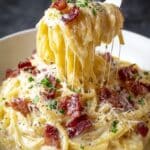
Gordon Ramsay’s Carbonara is an authentic Italian pasta dish that masterfully combines crispy guanciale, rich eggs, and sharp Pecorino Romano cheese to create a creamy, indulgent sauce without using any cream. This recipe is a straightforward, elegant take on the classic Roman Carbonara that emphasizes quality ingredients and traditional techniques for a savory, satisfying meal.
- Prep Time: 10 minutes
- Cook Time: 15 minutes
- Total Time: 25 minutes
- Yield: 4 servings 1x
- Category: Main Course
- Method: Stovetop
- Cuisine: Italian
Ingredients
Pasta
- 1 pound spaghetti
Meat
- 5 ounces guanciale, pancetta, or thick-cut bacon, diced
Egg and Cheese Mixture
- 4 large eggs
- 1 cup grated Pecorino Romano cheese, plus more for serving
- 1/2 cup grated Parmesan cheese
- Freshly ground black pepper, to taste
Additional Flavorings
- 2 cloves garlic, minced (optional)
- 2 tablespoons olive oil (if using bacon, may not be needed)
- Salt, to taste (be careful – the cheese and guanciale are salty)
Instructions
- Dice the Guanciale: Cut the guanciale, pancetta, or bacon into approximately 1/4-inch pieces to ensure even cooking.
- Render the Fat: Place the diced guanciale in a cold large skillet to allow the fat to render slowly and evenly.
- Cook Over Medium-Low Heat: Turn the heat to medium-low and cook the guanciale, stirring occasionally for about 10 to 15 minutes until it is crispy and golden brown, being careful not to burn it.
- Remove and Reserve Fat: Take the crispy guanciale out with a slotted spoon and drain on paper towels; keep the rendered fat in the pan for flavoring.
- Sauté Garlic (Optional): If using garlic, add olive oil if needed to the pan with the rendered fat, then add minced garlic and sauté over medium-low heat for about 30 seconds until fragrant without burning. Immediately remove from the heat.
- Prepare Egg and Cheese Mixture: In a medium bowl, whisk together the eggs, Pecorino Romano, Parmesan, and a generous amount of freshly ground black pepper until smooth and well combined without lumps, creating a thick but pourable mixture.
- Seasoning: Taste the mixture and add salt sparingly, as the cheese and guanciale are already salty.
Notes
- Start cooking the guanciale in a cold pan to properly render fat without burning.
- The garlic is optional but adds a lovely aromatic note if sautéed carefully.
- Do not add cream; the sauce’s creaminess comes from the emulsion of eggs and cheese with the pasta water and fat.
- Be cautious with salt since Pecorino Romano and guanciale are naturally salty.
- Use freshly ground black pepper generously for authentic flavor.
- Reserve some cheese for garnishing the finished dish.
Keywords: Gordon Ramsay Carbonara, authentic Carbonara, Italian pasta, guanciale pasta, Pecorino Romano pasta, classic Carbonara recipe